 Skip to content
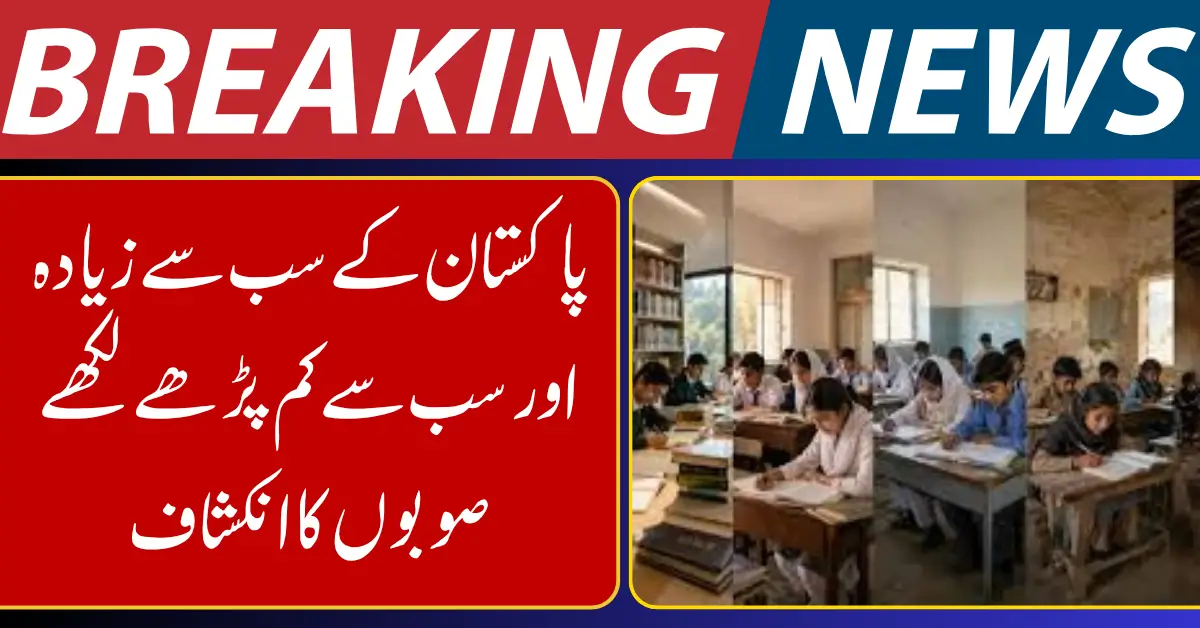
Punjab has emerged as Pakistan’s most literate province, according to the latest findings highlighted in the Pakistan Economic Survey. The new data provides a clearer picture of educational progress across the country while also revealing significant differences between provinces.
The survey shows that Punjab recorded the highest literacy rate at 68%, maintaining its position as the leading province in education outcomes. The province has benefited from a large network of schools, improved access to educational facilities, and various initiatives aimed at increasing enrollment and reducing dropout rates.
Read More: PECTAA Issues New Guidelines for Grade 5 Annual Assessment Registration
Sindh and Khyber Pakhtunkhwa (KP) followed with literacy rates of 58% each. While both provinces have made progress in expanding access to education, challenges remain in rural and underserved areas where school attendance and learning outcomes continue to lag behind urban centers.
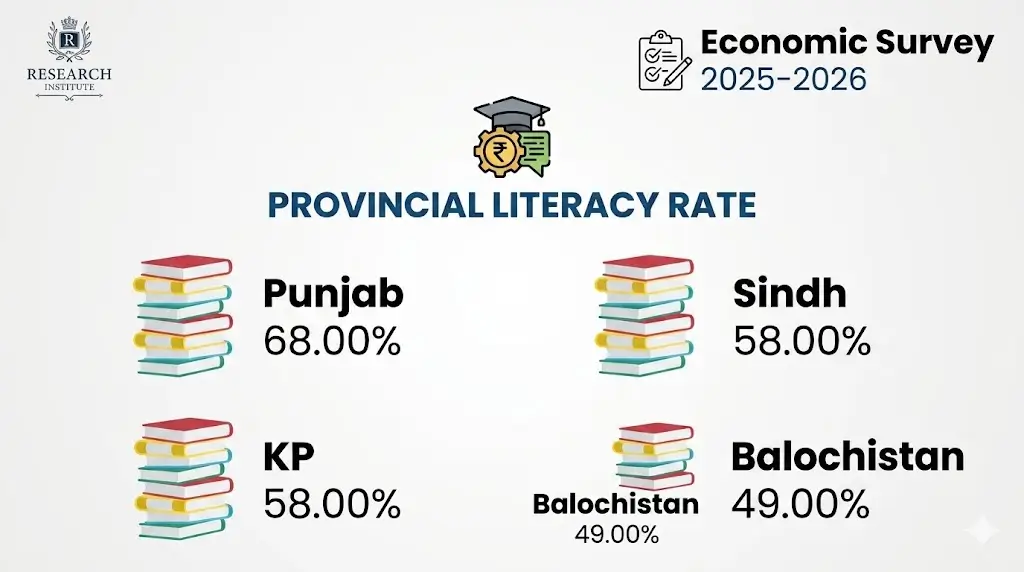
At the other end of the rankings, Balochistan recorded the lowest literacy rate at 49%. Education experts have long pointed to factors such as scattered populations, limited infrastructure, teacher shortages, and poverty as major obstacles to educational development in the province. Many remote communities still face difficulties accessing quality schooling.
The survey highlights a persistent literacy gap between Pakistan’s provinces, underscoring the need for targeted policies that address local challenges rather than relying on a one-size-fits-all approach. Experts believe that improving teacher training, expanding school infrastructure, and increasing investment in rural education could help narrow these disparities.
Education remains one of the most important drivers of economic growth and social development. Higher literacy rates are closely linked to better employment opportunities, improved health outcomes, and increased productivity. As Pakistan continues efforts to strengthen its economy, investment in education is expected to remain a key priority.
The latest figures also suggest that while literacy levels have improved over time, substantial work remains to ensure that every child has access to quality education regardless of where they live. Policymakers, educators, and provincial governments are expected to use these findings to shape future reforms aimed at raising literacy rates and reducing educational inequalities across the country.
Read More: BISE Abbottabad 10th Class Result 2026
With millions of young Pakistanis entering school age each year, the challenge of improving literacy and learning outcomes will remain central to the country’s long-term development goals.